
They Are People First
We built a culture that demands everything from athletes. We forgot to give them something basic in return.

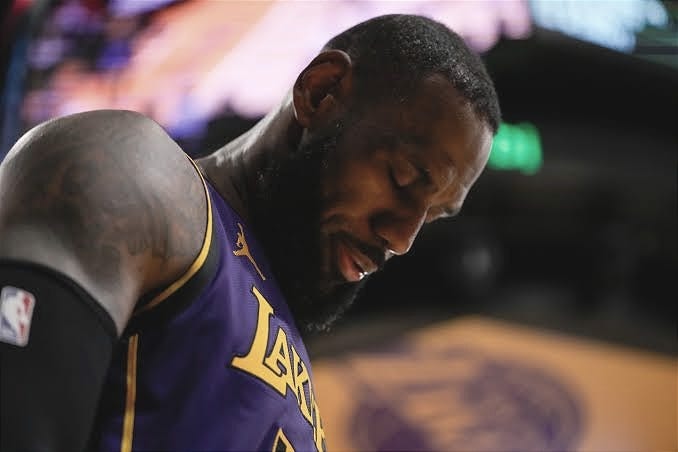
The Quote We Need to Stop Repeating
You’ve heard it a thousand times.
Respect is earned, not given.
It gets said like it’s wisdom. Like it’s a code to live by. Like the person saying it has figured something out that the rest of us are still working toward.
I disagree with it completely.
And I think if you sit with it long enough, you will too.
What that quote actually does is give people permission to withhold basic human dignity until someone performs well enough to deserve it. It turns respect into a transaction. Something you have to work for, prove yourself worthy of, and maintain through consistent output.
That’s not respect.
That’s a contract.
And we have been applying it to athletes, to each other, and to ourselves in ways that are doing real damage.
What We Ask of Them
Think about what we actually ask of professional athletes.
We ask them to show up 365 days a year. To be locked in every practice, every game, every press conference, every social media appearance. To perform at the highest possible level when the lights are brightest. To sacrifice relationships, sleep, their bodies, and sometimes their minds in pursuit of a standard that most humans could not survive for a single week.
And then, when they fall short of that standard, even once, even in the most human way imaginable, we decide they haven’t earned it.
We pull the respect back.
We call them soft. Overrated. Not built for the moment.
We write the takes. We make the videos. We fill the comment sections with the kind of certainty that only exists in people who have never had to perform under that kind of pressure.
And we forget, completely and conveniently, that there is a person inside the jersey.
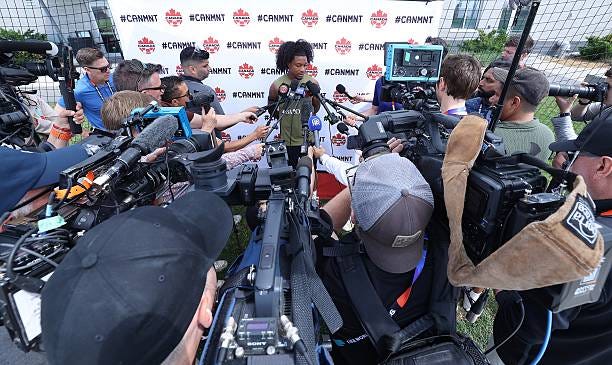
Vince Carter talked about this. The way media coverage shapes how athletes feel about themselves. The way a bad game can become a bad week, a bad week can become a bad month, and the noise from outside finds its way inside no matter how hard you try to block it.
These are not robots.
They are people who read what is written about them. Who hear what is said. Who carry the weight of public opinion into their homes, their relationships, and their private moments.
We write the story and we forget they are in it.
The Performance Trap
There is a piece on Psychology Today about our cultural obsession with high performance. The way we have built entire systems around the idea that your value is inseparable from your output. That what you produce is what you are worth.
It is not limited to sports. We do it everywhere.
To our coworkers. To our friends. To the people we love. We measure people by what they do for us, what they contribute, whether they show up at full capacity when we need them.
And when they don’t, we pull back.
We decide they haven’t earned it.
The athlete who misses the big shot. The friend who cancels plans when they are struggling. The coworker who goes through something hard and brings it to work with them. We are conditioned to see these as failures of performance rather than moments of humanity.
But here is the thing.
You are not your output.
You never were.
Peyton Manning and Michael Porter Jr. talked about the mood swings that come from media coverage. How a great game can make an athlete feel invincible and a critical headline can take that away in minutes. The emotional volatility that comes from tying your self-worth to public perception is something most athletes deal with quietly, because the culture tells them that admitting it is weakness.
That culture starts with us. With how we talk about them. With what we decide they have to do to deserve basic dignity.
We Do It to Each Other Too
I want to be clear that this is not just about athletes.
Athletes are the most visible version of a problem that lives everywhere.
We look at each other the same way. We decide who deserves our time, our energy, our warmth, based on what they have given us recently. We keep mental scorecards. We rank people by their usefulness and call it discernment.
And somewhere in that process we stop seeing people as people and start seeing them as what they can do for us.
Michael Beasley talked about being judged without being understood. About people seeing the headlines and forming the verdict before they ever asked a single question about the life behind the decisions. About how that kind of judgment follows you and shapes how you see yourself over time.
He is not alone in that experience.
Most of us have been judged without being known.
Most of us have had our value decided by someone who only saw one moment, one mistake, one version of us that was not the whole story.
And most of us know how much that hurts.
So why do we keep doing it to others?
Respect as a Starting Point
Here is what I want to propose instead.
Respect as a starting point. Not a finish line.
Not something you build toward through consistent performance and good decisions and publicly acceptable behavior.
Something you extend to a person the moment you recognize that they are a person. That they are carrying something you cannot see. That they are navigating a life you do not have full access to. That they are, in the most basic and irreducible sense, a human being who deserves to be treated like one.
That does not mean there are no standards. It does not mean performance does not matter. It does not mean we cannot hold athletes, public figures, or each other accountable for real failures.
It means we start from a place of dignity rather than suspicion.
It means when someone underperforms, our first instinct is not to strip away the thing we were withholding anyway. It means we hold the person and the performance separately in our minds long enough to respond like humans rather than critics.
It means we remember that the athlete who missed the shot in Game 7 went home to the same fears and doubts and grief and joy and love that all of us go home to.
They are not built differently from us in that way.
They just do it in front of more people.
THE FOURTH QUARTER
We spend so much of our lives trying to be unforgettable to others.
And in doing that we sometimes forget to just be present to them.
The athletes we cover, the ones we celebrate and then dismantle the moment they disappoint us, they are showing us something real every time they step onto a court or a field or a podium. They are showing us what it looks like to pursue something with your whole self in front of a world that has already decided what they are worth.
That takes something.
And they deserve more than a transaction in return.
Give people the dignity first. The respect first. Before the performance. Before the proof. Before they have done a single thing to earn it by whatever standard you have set in your head.
Not because they deserve it more than you do.
Because you deserve to be the kind of person who gives it.
We are all in this together.
All going through something.
All trying to figure out what our lives are supposed to mean and whether we are doing enough and whether we are loved and whether any of it matters.
The athlete on the court is doing the same thing.
They just have cameras pointed at them while they do it.
Show up for people. Give grace freely. And remember that value is not something you perform your way into.
You already have it.
So does everyone else.
Who in sports do you feel has been consistently misjudged by the media or the public?
Drop a name.
More Content:
Source
Psychology Today: Why Are We So Obsessed With High Performance
Very thoughtful piece. We (myself included) are far too critical of athletes; there's a difference between constructive criticism and discourse about a player versus personal attacks and criticism that we ignore too often.
This is the kind of reminder everyone should see! It’s so wild how people are so quick to want to tear someone down, it’s to the point where people are rooting for someone’s downfall more often than supporting them and appreciating them and that’s across the board not just athletes